SIBINE
SIBINE – Social integration through education for sustainable development.
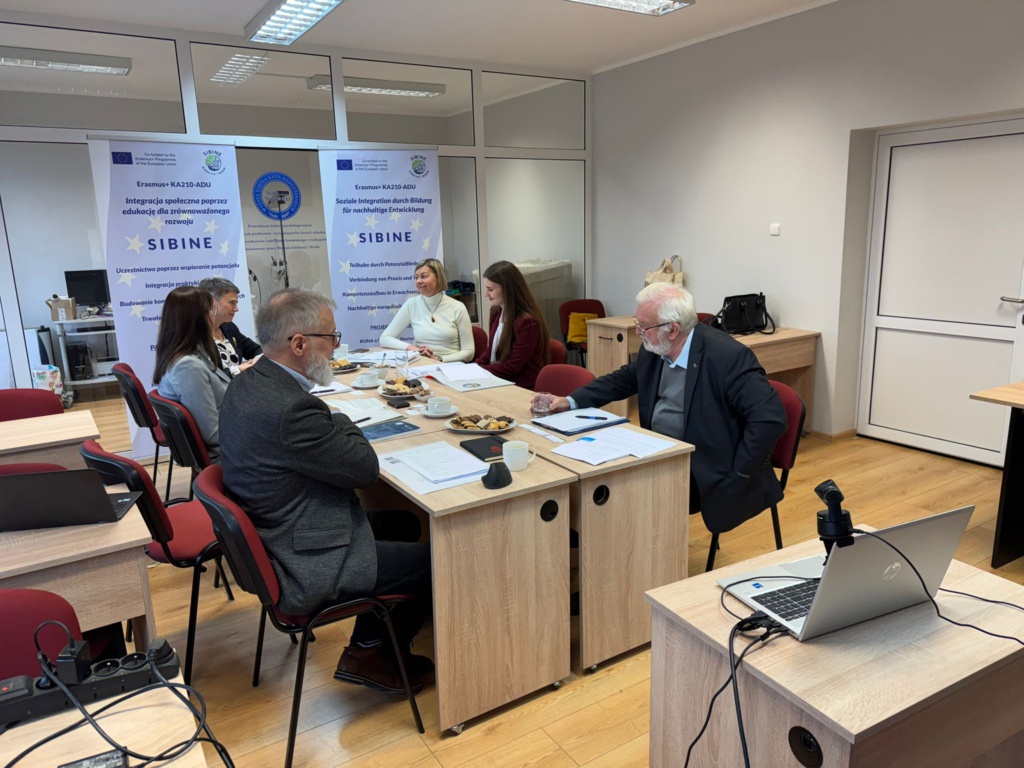
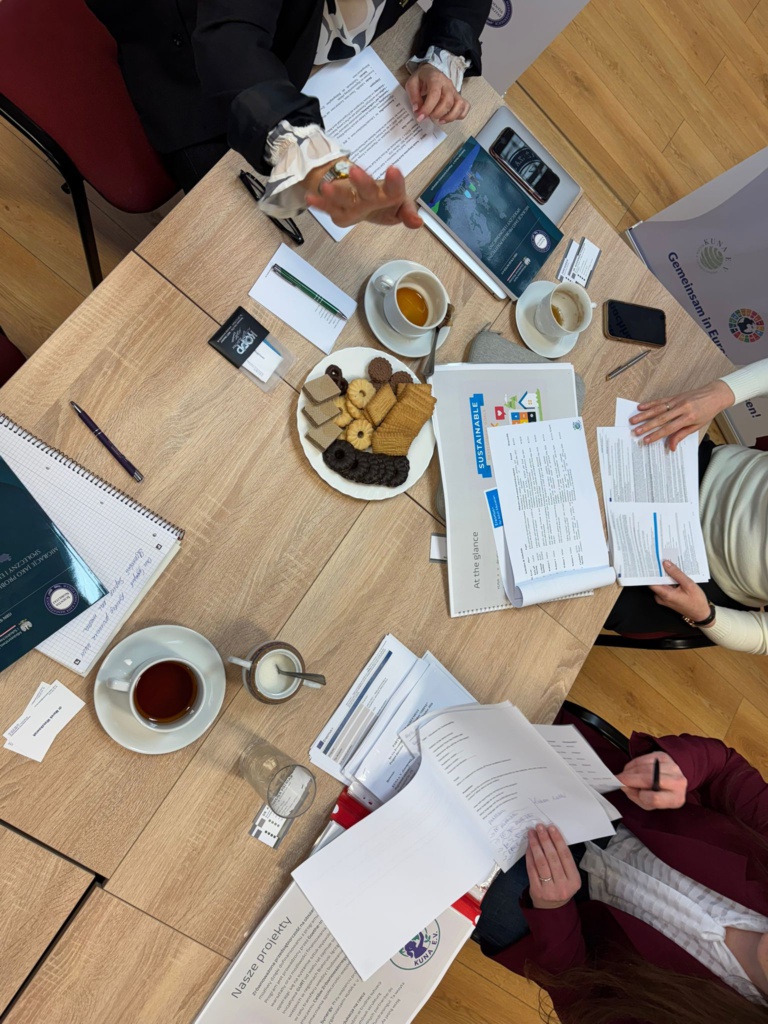
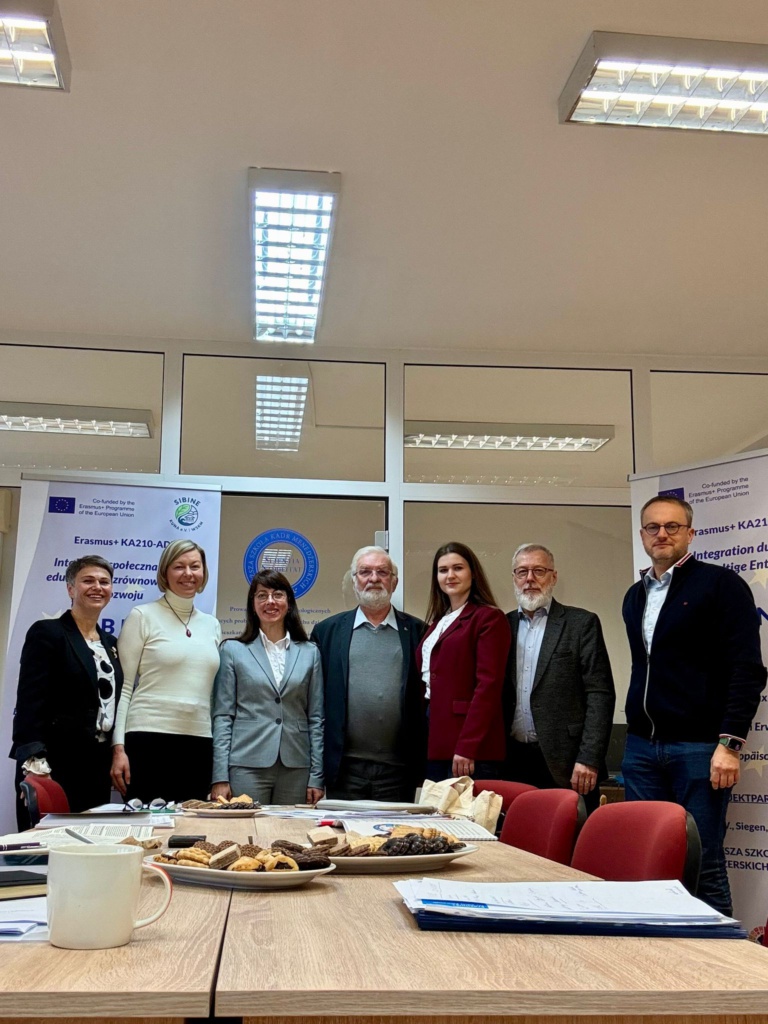
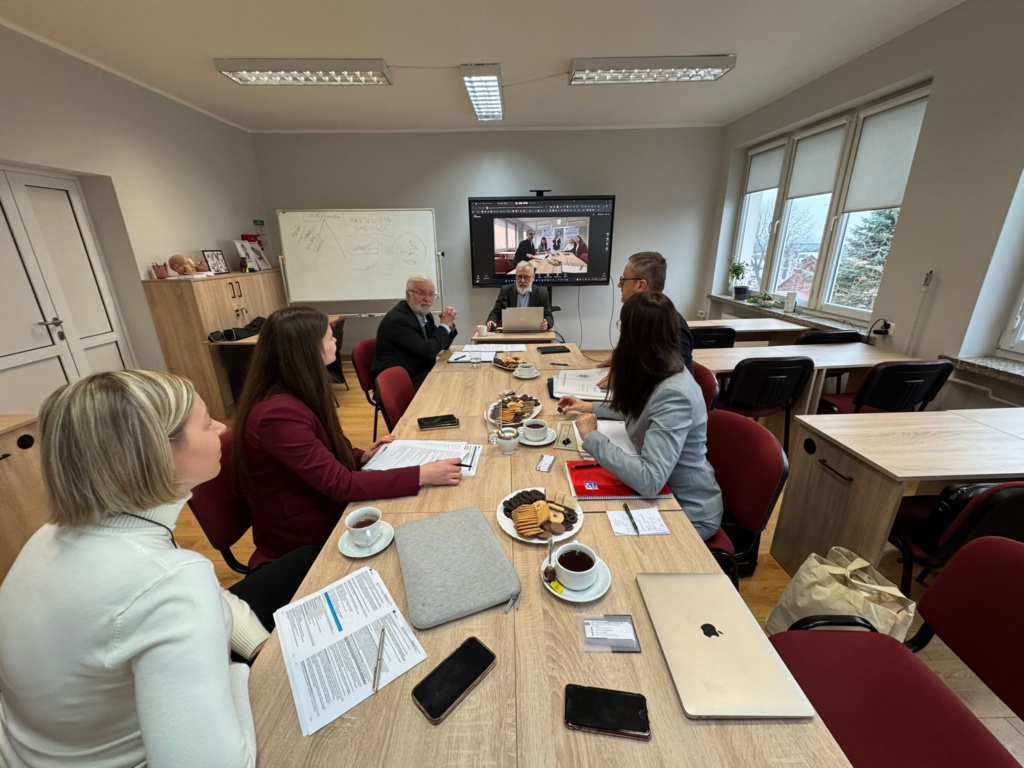
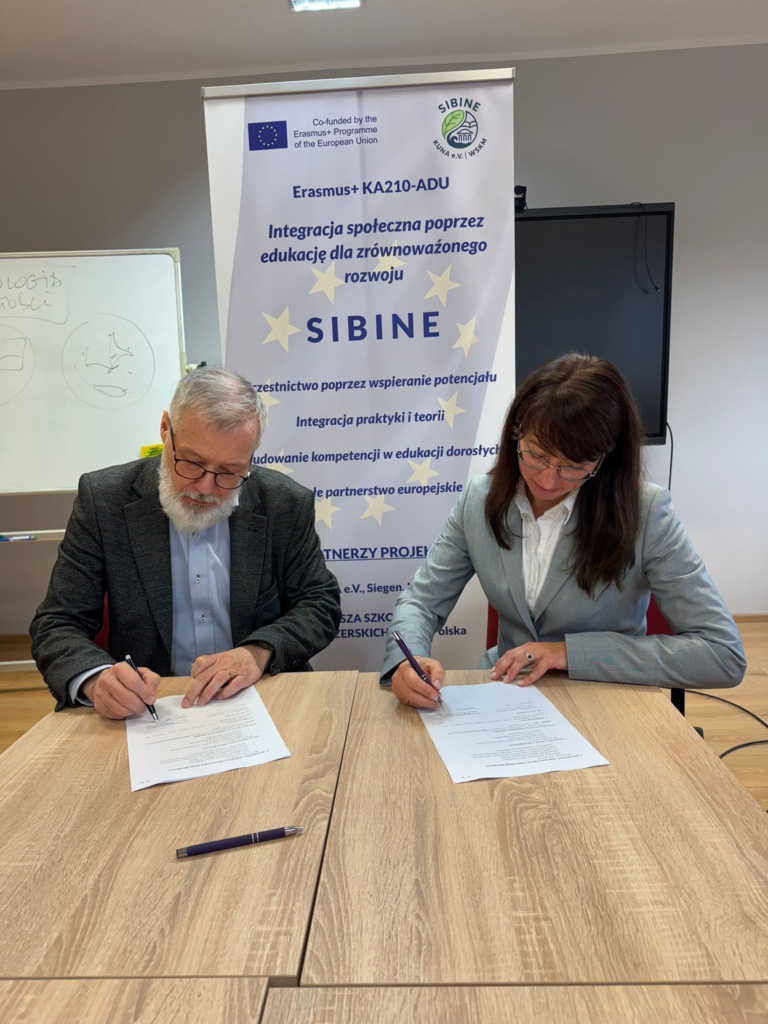
As part of our Erasmus+ project “SIBINE – Social Integration through Education for Sustainable Development,” the first face-to-face preparatory meeting of the project management team took place on November 23 at the University of Management(WSKM) in Konin, Poland.
The purpose of this meeting was to get to know each other better in person, sign the partnership and to clarify organizational and content-related issues, as well as to coordinate the next steps for project implementation.
Participants in Konin:
KUNA e. V. (Germany):
- Natalia Neumann, Head of the Association/Chairwoman
- Dr. Alexandra Pozniak, Scientific Expert, Project Manager
- Ihar Kudzin, EO, Project Manager
WSKM (Poland):
- Dr. Krzysztof Kupiński, Rector
- Dr. Marek Waszkowiak, Vice-Rector
- Marika Kaczyńska, Project Contact Person
- Dr. Svetlana Kul-Silvestrova and Oleg Sudarev, Staff Members
Polish National Erasmus+ Agency:
- Ewa Wasielewska, NA representative



Why is SIBINE so important today?
SIBINE combines three key areas:
adult education, migration pedagogy, and education for sustainable development. This creates an innovative space where civil society practice from Germany—in particular the experience of NGOs in non-formal adult education, integration work, and sustainability projects—meets the academic expertise of WSKM in Poland.
By combining practical knowledge and scientific analysis, we can gather new methods, best practices, and effective learning formats that empower migrants and promote sustainable educational processes.
Kick-off Seminar of the Erasmus+ Project SIBINE Successfully Held!
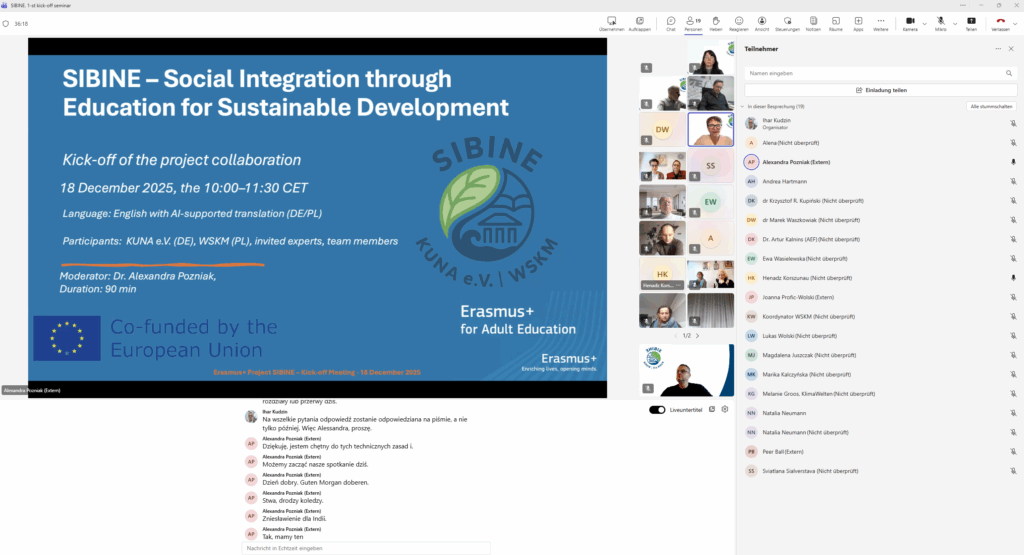
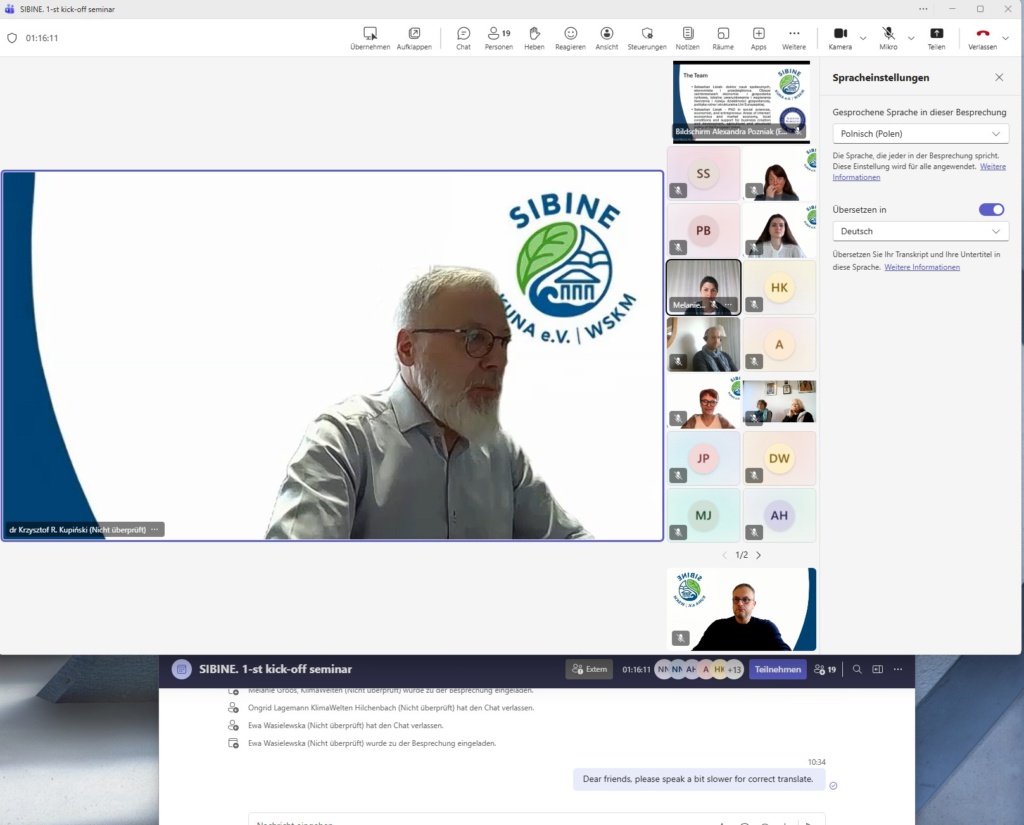
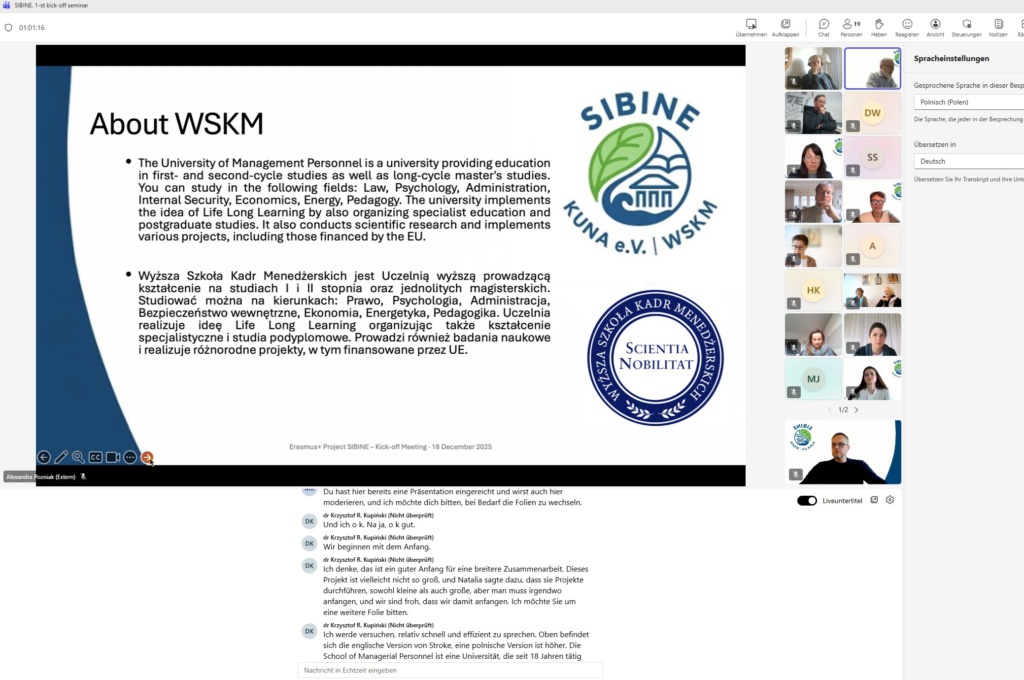
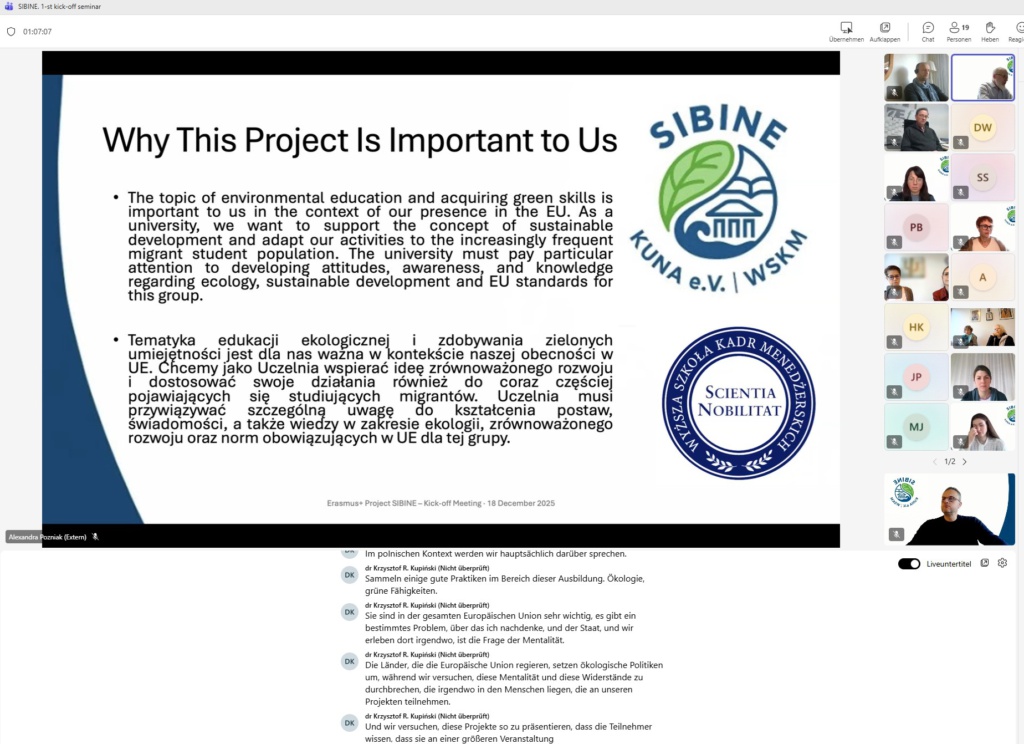
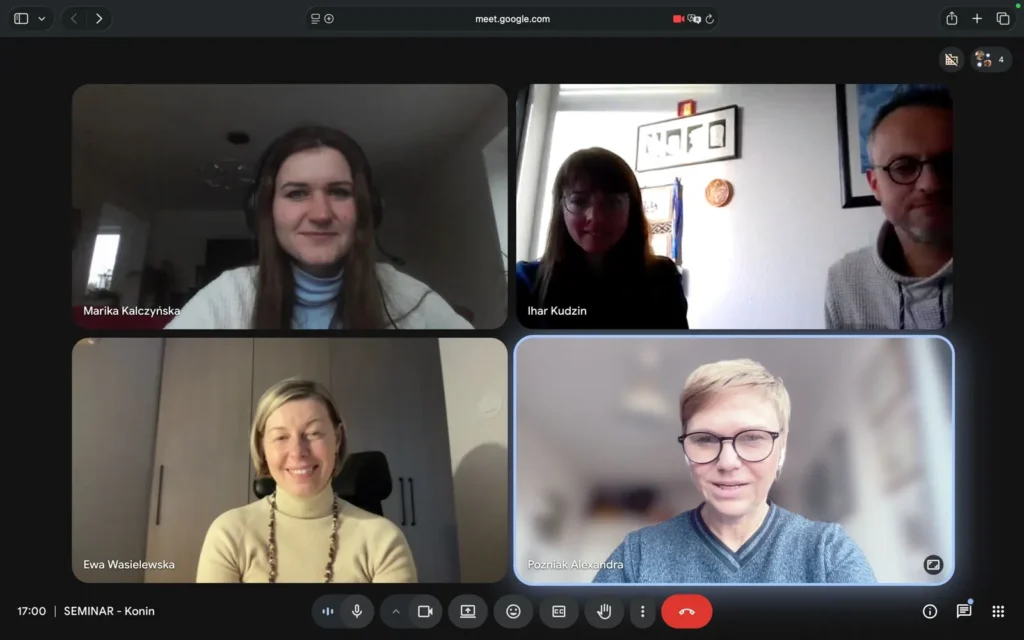
On 18 December 2025, KUNA e.V., in cooperation with the Polish partner WSKM, successfully held the online kick-off seminar of the Erasmus+ KA210-ADU project SIBINE: Social Integration through Education for Sustainable Development.
The seminar marked the official start of the project and brought together a unique and highly diverse team of participants: academics from Poland and representatives of various NGOs and grassroots organisations from Germany, all with strong expertise in non-formal adult education, migration, social integration, and education for sustainable development (ESD). Click for more…
During the seminar, project partners presented the objectives, structure, and timeline of SIBINE. The project aims to strengthen the social integration of adults with migration experience through innovative approaches to ESD in non-formal adult education. Particular attention was given to the project’s unique positioning at the intersection of adult education, sustainability education, and migration pedagogy.
Organisational frameworks, communication rules, dissemination strategies, and the distribution of responsibilities among partners were discussed and agreed upon. In the closing round, participants shared their expectations and hopes for the project’s development and upcoming activities.
The next steps include the preparation of the exchange seminar in Konin (Poland) in February 2026 and the launch of a thematic webinar series in spring 2026.
KUNA e.V. and WSKM look forward to a productive and sustainable cooperation within the SIBINE project.
Preparing for the Erasmus+ SIBINE Exchange Meeting in Konin, Poland
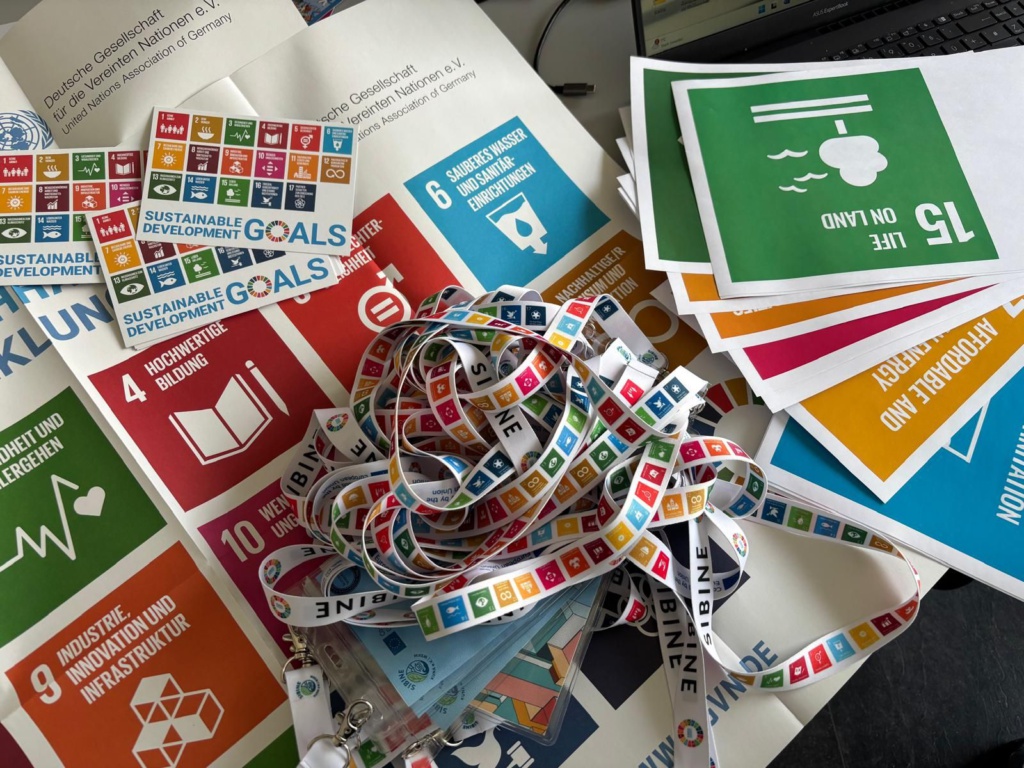
We are currently in the intensive preparation phase for our upcoming Erasmus+ SIBINE (KA210-ADU) Exchange Meeting: «Challenges and Opportunities for Education for Sustainable Development in Adult Education for People with a Migration Background».
Venue: WSKM, Konin, Poland
Dates: 21–22 February 2026
The seminar will bring together over 25 practitioners, researchers, and educators from Germany and Poland for two days of dialogue, reflection, and collaborative learning. Click for more…
A dedicated international working group has been engaged in thorough and systematic preparation behind the scenes, shaping a rich programme that combines conceptual inputs on Education for Sustainable Development (ESD), practical perspectives from adult education and integration work, peer exchange on local experiences, and space for collective reflection and co-creation.
Our shared focus is clear: how can ESD become a real instrument for the integration of people with a migration background – not only in terms of knowledge, but also participation, agency, and meaningful engagement?
The Exchange Meeting is designed as a living learning space, a place to share practices, explore challenges and develop ideas together across borders.
We very much look forward to welcoming our participants to Konin and to lively exchanges of experiences, perspectives, and approaches to using ESD as a tool for social inclusion and sustainable integration.
We warmly welcome contributions, ideas and examples from colleagues working at the intersection of adult education, sustainability and migration.
Let’s learn from each other!